


SOUND SHOOTING!!Rhythm Shooter
4.7133.00 Reviews
App Specs
- Version
- 1.26
- Updated On
- License
- Free
- Downloads
- 100,000+
- Developer
- EZDAEMON
- Categories
- Music
- Platform
- Android
Screenshots


 Analysis by AppCompare
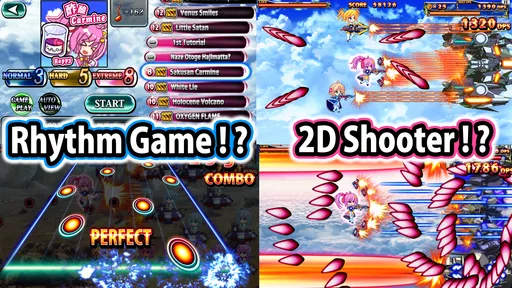
I approached SOUND SHOOTING!!Rhythm Shooter expecting a music game with a shooting theme, but its appeal is more specific than that label suggests. It asks me to listen, react, and manage movement at the same time, so the experience sits between a traditional rhythm game and a compact arcade shooter. That combination makes it attractive when I want something more active than tapping notes, yet more musical and structured than a standard shooting game.
The game is developed by EZDAEMON and is free to start, with optional in-app purchases priced from $1.99 to $8.49 per item. It belongs to the Music category, carries a Teen content rating, and runs on Android devices beginning with version 4.4. Its current version is 1.26, while the original release arrived on Apr 12, 2019. Those details matter because this is not aimed only at people with recent hardware; it is a relatively accessible way to try a rhythm-action game without paying upfront.
How I Decided Whether It Was Worth Keeping
I use this section to judge staying power rather than first impressions: whether the rhythm-and-shooting mix gives me a reason to return after its novelty wears off. I also consider the small habits that make play more rewarding, such as noticing which part of a run disrupts my focus instead of retrying blindly. That leads naturally to the practical question of how much upkeep the game asks of me.
The key question is whether you want rhythm with pressure
My first decision criterion was simple: do I want to follow a beat, or do I want to follow a beat while dealing with danger on screen? If I only want a relaxed music game, a conventional note-tapping title may feel cleaner. Here, the musical timing is tied to action, so my attention is divided between reading what is coming and responding quickly enough to stay in control.
That extra layer changes the feel of every session. A missed input is not just a musical mistake; it can affect how safely I handle the action around it. I found that the game rewards active concentration rather than passive listening. Short sessions work well because I can play a stage, identify the part that caused trouble, and try again with a specific adjustment in mind.
I also considered how much patience the game demands. Rhythm games often look easy in screenshots because the basic controls are familiar. The real test comes when patterns become faster or more crowded. This title is best approached as a game I learn gradually, not as background entertainment I can play while distracted.
Why the hybrid format changes the learning curve
In a normal rhythm game, I can often focus almost entirely on lanes, notes, or timing markers. In a typical shooter, I concentrate on positioning and threats. This game combines those habits, which means the first few attempts are partly about discovering where my eyes should rest. I had to stop staring at one part of the screen and learn to read the whole play area.
Worth Reading Before You Choose

Flipboard Shows What News Apps Must Do Beyond the Feed

Switching to Android Auto Means Rethinking Your Driving Routine

Google Calendar Makes a Crowded Week Easier to Manage

Ludo King Makes the Most of the Minutes Between Plans

Baby Panda World Brings Quick Play to Modern Phones, but Its Game Library Feels Busy

ESPN’s Live Game View Makes Following Close Games Easier
That is one of the more useful, less obvious things to understand before downloading it: improvement does not come only from faster fingers. It also comes from better visual prioritization. I became more consistent when I watched the flow of the stage instead of reacting to each individual event at the last possible moment.
For a new player, I recommend treating early failures as information. Notice whether the problem is timing, movement, or simply trying to process too much at once. Replaying with one goal is more effective than repeatedly starting over without changing anything. That approach makes the game feel fairer and turns the action into a small practice routine rather than a test of luck.
Where it wins against ordinary music games
The strongest point is variety within the moment-to-moment play. The musical layer gives the action a recognizable pulse, while the shooting side keeps me physically engaged with what is happening. I do not get the same sensation from a basic tap-to-the-beat game, where the challenge can become a narrow exercise in timing.
This also gives the game a useful advantage for people who lose interest in rhythm titles that feel too repetitive. The action creates another reason to stay alert, and the combination can make a familiar section feel different when I replay it with a new strategy. It is not simply a rhythm game with decorative shooter imagery; the two ideas work together to shape how I play.
The game is also a good fit for players who enjoy arcade-style repetition. I can return to a difficult section, adjust my timing, and try to make a cleaner run. That loop is satisfying when I am in the mood to improve a particular skill instead of just consuming new content.
A practical way to play on a phone
I found that posture and screen visibility matter more than I expected. Holding the phone too low makes it harder to scan both the musical cues and the action. I get better results when the device is steady and my thumbs are not covering important areas. This is especially useful during a short commute or a waiting-room session, where rushed handling can feel like a gameplay problem even when my timing is fine.
Sound is another important consideration. The musical structure is not merely decoration, so playing with audio makes it easier to anticipate what is happening. If I need to play silently, I treat the visual cues as the main guide, but that requires more attention and can reduce the natural flow. For serious attempts, headphones or a quiet environment are preferable, provided the volume remains comfortable.
A useful routine is to play one attempt for observation, one for correction, and one for confirmation. On the first run, I look for the section that breaks my concentration. On the second, I focus only on that transition. On the third, I check whether the improvement survives when I play the entire stage. This keeps the hybrid design from becoming overwhelming.
What the free entry point really means
Being free makes it easy to test whether the unusual format suits me before spending anything. I would not make a purchase simply because I enjoyed the first few minutes; I would first decide whether I like the core rhythm-and-action loop and whether I expect to keep replaying it.
The optional purchases range from $1.99 to $8.49 per item, so the sensible approach is to treat them as a later choice rather than part of the initial decision. The important question is not whether the game has paid items, but whether the free experience already gives me enough reason to return. If I am only mildly curious, I can try it without an upfront cost and stop there.
For younger players, the Teen rating is also worth considering. Parents should judge whether the combination of music, action, and in-app purchasing suits the person using the device. The rating does not automatically make the game unsuitable, but it is a reminder that this is not designed as a child-focused music toy.
Where another category may be a better fit
I would choose a conventional rhythm game instead if my main goal were calm timing practice, a cleaner interface, or a more focused musical routine. The shooting component is the reason to choose this title, but it is also the reason some players may find it busy. Someone who dislikes multitasking during music gameplay may feel that the action distracts from the beat.
I would also look elsewhere if I wanted a pure shooter with movement and aiming as the central attraction. This game uses shooting as part of a musical structure, so it should not be judged like a dedicated action title. Players seeking deep tactical planning, long-form progression, or a realistic combat experience are likely asking it to do something it was not built to do.
There is a similar trade-off with accessibility. The hybrid format can be exciting for players who enjoy quick reactions, but it may be frustrating for anyone who needs a slower pace or finds simultaneous visual demands tiring. In that situation, a simpler music game with fewer competing tasks would probably be the kinder choice.
The cost of changing from a familiar rhythm game
Switching to this game does not cost money at the start, but it does require changing how I think about rhythm play. A player used to following one predictable line of notes may initially over-focus on timing and neglect the action. A player arriving from shooting games may do the opposite and react to movement while losing the musical pattern.
The adjustment is worthwhile if I enjoy learning a new control rhythm. It is less worthwhile if I want immediate comfort from a familiar format. That is the real switching cost: not the download price, but the mental effort of building a new reading habit. I found the transition easier when I stopped comparing every moment with a standard rhythm game and accepted that the action is part of the musical challenge.
There is also a time cost. The game rewards repetition, and improvement may depend on revisiting a section rather than constantly moving forward. If I have only a few minutes, that can be ideal because one focused attempt is enough. If I want a large sense of progression every time I open a game, the retry-oriented structure may feel less rewarding.
Who I think will enjoy it most
I recommend it to players who like rhythm games but want more physical involvement, and to arcade fans who enjoy music-driven challenges. It is particularly suitable for someone who likes identifying a mistake, changing technique, and trying again. The free starting point makes it easy to test that relationship without committing to a purchase.
It can also work well in an everyday situation where I have a short break but want something that demands attention. Instead of opening a passive time-killer, I can play a focused attempt, listen to the musical flow, and put the phone away after a few minutes. The game feels better in that setting than during a long session where I expect a constant stream of new content.
Players who enjoy showing off high-level reactions may appreciate the satisfaction of mastering difficult passages, but I would not recommend it to someone who wants a completely relaxed, hands-off music experience. It is also not my first choice for a child-oriented game, a story-heavy adventure, or a realistic shooter.
My final recommendation
After spending time with it, I see SOUND SHOOTING!!Rhythm Shooter as a focused experiment that succeeds because its two genres affect each other. The music gives the shooting a pulse, while the action prevents the rhythm play from becoming too narrow. That makes it more distinctive than a standard tap game, although also less immediately comfortable.
My advice is to download it if you are curious about rhythm-action games and are willing to learn through retries. Start with the free experience, play with sound when possible, keep the phone steady, and judge it after several focused attempts rather than one rushed session. The average rating is 4.7 from around 3K ratings, and the game has passed 100K+ installs, which suggests that its unusual format has found an audience, but those figures should not replace your own test of the controls.
EZDAEMON has made something that is easy to describe in one phrase but more interesting to play than that phrase implies. I would keep it installed for short, active sessions and recommend it to friends who want music gameplay with an arcade edge. If you prefer a pure rhythm interface or a dedicated shooter, another category will serve you better. For everyone in between, this is a free and distinctive game worth trying before deciding whether its demanding blend is your kind of fun.
Pros
- Combines rhythm gameplay with fast-paced shooting for a distinctive experience.
- Short stages make it easy to enjoy during quick breaks.
- Responsive controls make aiming and timing feel satisfying.
- Bright visuals and energetic music create an engaging arcade atmosphere.
- Unlockable content gives players reasons to keep improving their scores.
Cons
- Difficulty can rise sharply
- which may frustrate casual players.
- Some songs and content may require extended play or in-app purchases.
- Repetition can become noticeable after playing the same stages often.
- Busy effects may make targets harder to see during intense sections.
- Performance may vary on older devices
- especially during crowded scenes.
FAQs for SOUND SHOOTING!!Rhythm Shooter
What is SOUND SHOOTING!!Rhythm Shooter?
SOUND SHOOTING!!Rhythm Shooter is a music-based action game that combines rhythm gameplay with shooting mechanics. Players follow the beat of each song while aiming, tapping, or firing at targets and enemies. The experience is designed to test timing, concentration, and reflexes, with visual effects and sound cues working together to make every stage feel like an interactive music performance.
How is the gameplay in SOUND SHOOTING!!Rhythm Shooter?
The gameplay focuses on matching your actions to the rhythm of the selected track while dealing with targets appearing on the screen. Success depends on listening carefully, recognizing visual patterns, and reacting at the correct moment. It is easy to understand after a short tutorial, but later stages can become demanding, especially when the music speeds up or several targets appear at once.
Is SOUND SHOOTING!!Rhythm Shooter suitable for beginners?
Yes, beginners can start playing without needing previous experience with rhythm games or shooting games. The basic controls are straightforward, and early levels help you learn how timing, aiming, and attacks work together. However, the difficulty may increase as you progress, so new players should expect to replay challenging stages and improve their timing rather than complete everything successfully on the first attempt.
Does SOUND SHOOTING!!Rhythm Shooter require an internet connection?
The connection requirements may depend on the version of the game and the feature you are using. Basic gameplay may be available without a constant connection, but downloading content, receiving updates, viewing advertisements, syncing progress, or accessing online features can require internet access. It is best to launch the game once while connected and check its in-game instructions before playing offline.
Are there advertisements or in-app purchases in SOUND SHOOTING!!Rhythm Shooter?
The game may include advertising or optional purchases, depending on the platform, region, and current release. Advertisements can sometimes appear between stages or when you choose a reward, while purchases may offer extra content, convenience items, or ways to support development. Before downloading, review the store listing and parental-control settings if the game will be used by younger players.


